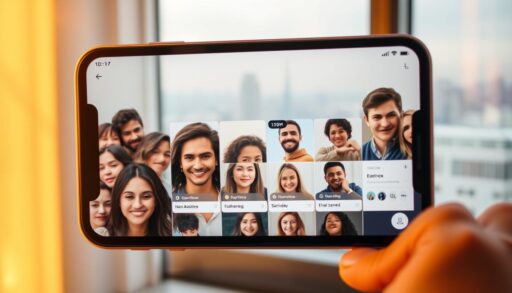
This roundup cuts through the noise to show which platforms help people spend time where it matters. It explains who each app serves, core features, and the fastest way to test fit in the United States.
Safety and control are front and center for 2025. Tinder’s verification and Share My Date tools, Hinge’s AI prompts, Bumble’s verification refresh, Pure’s ephemeral chats, Match’s Vibe Check, and OkCupid’s inclusivity measures set new expectations.
Swiping and matching are table stakes. The real difference is profile quality, clear intent, and tools that reduce friction. This guide maps goals to the right solution so readers avoid wasting time.
Recommendations rely on real user experience, privacy practices, and pricing seen in U.S. app stores. A final checklist will simplify the path from first message to a meaningful meet-up.
Key Takeaways
- Focus on apps that match each person’s goals, not trends.
- Safety, verification, and control are buying priorities in 2025.
- Look for features that boost profile quality and conversation starters.
- Try free tiers and fast checks before committing to paid plans.
- Customer reviews and privacy practices shape practical recommendations.
Why people in the United States are rethinking Dating Apps today
A growing number of users now measure platforms by how well they protect time and trust.
App fatigue describes the burnout from endless swiping, unclear intentions, and low-quality interactions. Many people report they no longer want more profiles; they want better alignment between goals and platform culture.
Safety and verification are non-negotiable. Tinder’s Share My Date and photo checks, Hinge’s growth away from hookup-first spaces, and Bumble’s verification refresh show that people value tools that reduce risk and increase confidence.
Practical utility now beats novelty. Users want an app that saves time and surfaces compatible matches quickly. Economic sensitivity also matters—people weigh free tiers against paid features that deliver real outcomes.
Gen Z and millennials lead the push for upfront intention labels and compatibility signals. Reviews, visible safety measures, and thoughtful profiles influence where people invest their time. The shift favors conversation-focused design over look-first feeds.
Commercial intent decoded: how to choose a dating app that’s worth your time
The smartest way to save time is to match app features to clear goals. Start by checking user density in your city and age range. More users increase options but not always quality.
Safety matters. Evaluate photo verification, language detection, report/block tools, and date-sharing options. These protect time and reduce risk.
Key decision factors: user base, safety, intentions, and price
Look for platforms that label intentions—serious, casual, ENM, or friends. Clear labels cut mismatches and fatigue. Read prompts and profiles to judge conversation quality, not just photos.
“Pick fewer platforms with stronger matches over many shallow sign-ups.”
| Factor | What to check | When to pay |
|---|---|---|
| User base | Density by city & age | If local volume is low |
| Safety | Verification, reporting, date-share | Rarely—unless extra tools add value |
| Intent | Labels, prompts, compatibility scores | Pay if filters boost match quality |
| Price | Free discovery → mid-tier convenience → top-tier travel | Use trial months to test ROI |
What app fatigue means for your selection process
App fatigue favors fewer, higher-quality sign-ups. Prioritize control features like incognito mode and blocks. Choose platforms where compatibility prompts shorten the path to a meaningful relationship.
Top picks by goal: serious relationships, casual dating, and new friends
Different tools favor different goals: long-term relationships, casual meetups, or new friendships. Below are concise picks that align design with intent so people spend less time guessing and more time meeting matches.
Best for long-term potential
Hinge leads here. Conversation-forward prompts, Match Note, and a growing 2025 user base make it suited to people who want a real relationship.
Best for casual connection
Tinder still wins on scale and fast discovery. Explore and Modes help surface quick matches when casual dating is the goal.
Best for women taking the lead
Bumble gives initiation control to women and non-binary users. That design curbs unsolicited messages and raises conversation quality.
Best for inclusivity and compatibility filtering
OkCupid offers 22 genders, 12 orientations, and compatibility scores that filter dealbreakers early.
| Goal | Top pick | Why it fits |
|---|---|---|
| Long-term relationship | Hinge | Prompts, Match Note, conversation focus |
| Casual connection | Tinder | Scale, Modes, fast discovery |
| Women-led communication | Bumble | Initiation control, respectful inbox |
| Inclusivity & compatibility | OkCupid | Wide identity options, scoring |
Practical tip: If you’re looking for a specific outcome, test one goal-focused app and one generalist at the same time. Use verification and safety features as tie-breakers when choices are similar.
Tinder at present: still the biggest swipe, evolving beyond hookups
Even as it keeps the fast-swipe engine, Tinder has layered new discovery and safety tools to broaden its appeal.
Core behavior: Tinder delivers rapid swiping across massive users and a mutual “It’s a Match” double opt-in that requires consent before chat. The app reports 97+ billion matches historically, making it the default discovery hub for many people.
Signature features
- Explore & Modes: curated experiences like Double Date Mode and College Mode refine who you see.
- Safety toolkit: Share My Date, Photo Verification, language prompts, Report/Block, Block Contacts, and Video Chat.
- Fast discovery: Passport and Rewinds help travelers and heavy swiping sessions.
Premium tiers and perks
Plus adds Unlimited Likes, Passport, and Incognito. Gold lets you see who likes you and includes a Monthly Boost. Platinum prioritizes likes and allows messaging before a match. Boosts and Super Likes are sold a la carte to increase visibility.
Pros and cons from real-world use
Pros: unmatched scale, intuitive interface, strong discovery when traveling.
Cons: ad-heavy free tiers, complaints about pay-to-win dynamics, inactive profiles, and requests for more filters by location or race.
“Tinder remains the fastest way to find casual connections or test a market while carrying built-in safety tools.”
Who benefits: casual explorers, travelers, and people testing the waters who want robust verification and quick matches. For those seeking long-term commitment, other platforms may align better with serious intent.
Hinge: “Designed to be deleted” for intentional dating
Designed around prompts and thoughtful replies, Hinge rewards people who invest in a clear, honest profile. It moves the focus from photos to the things that start a real conversation.
Profiles that spark replies
Prompts, Backstory, and Match Note are core to Hinge’s profile design. Prompts invite a quick, authentic reply that reveals personality beyond photos.
Backstory gives free-text room to explain intent and values. Match Note lets a user send a thoughtful opener that stands out in a crowded inbox.
2025 growth and who it serves
In 2025 Hinge added AI Prompt Feedback and a new “Your World” prompt set developed with Esther Perel. These tools speed profile polish so the best traits show up fast.
The user base skews toward people seeking a serious relationship and deliberate matches rather than a fast swipe feed.
Pricing snapshot and setup tips
Hinge+: one month $32.99; three months $64.99; six months $99.99. HingeX: one month $49.99; three months $99.99; six months $149.99.
- Choose prompts that invite a reply and show humor or values.
- Use voice notes or short anecdotes to reduce small-talk loops.
- Prioritize a mix of candid photos and a descriptive Backstory.
“The app’s UX encourages replies rooted in shared interests or values.”
| Feature | What it does | Who benefits |
|---|---|---|
| Prompts | Invite targeted replies that reveal personality | People who prefer conversation over looks |
| Backstory | Free-text space to clarify intent and context | Users wanting honesty about goals |
| Match Note | Send a standout opener tied to profile details | Anyone aiming to start quality chats |
| AI Prompt Feedback | Suggests stronger answers and tone | Users polishing profiles quickly |
Bumble: women-first dating with a renewed focus on real love
When one group leads the first message, conversations start with clearer intent. Bumble requires women and non-binary people to send the initial note, and recipients have 24 hours to reply. That structure cuts down on unsolicited messages and lowers early ghosting.
How the core flow works
Initiation: one side sends the opener; the other side has a 24-hour response window. This nudges faster replies and more thoughtful intros.
2025 refresh and credibility boosts
Whitney Wolfe Herd returned as CEO and led the “For the Love of Love” campaign. Bumble added stronger photo verification and launched an advice hub with Jillian Turecki and Shan Boodram to help users craft better profiles and messages.
Utility beyond romance
Bumble includes BFF for friends and Bizz for networking, so people find connections beyond romantic matches. That broader utility helps users get more value from a single platform.
Premium: when it makes sense
- Monthly: $39.99; multi-month and lifetime plans available.
- Upgrade if a user sees long queues, needs extra filters, or wants extended match windows.
“The women-first rule filters unsolicited messages and often improves conversation quality.”
Who benefits: people who value control over first contact and prefer respectful inboxes. Profiles should state whether someone ‘re looking casual or committed to avoid mismatched intent.
- Use Opening Moves to set tone and invite specific replies.
- Verify photos to increase trust and response rate.
- Set short daily checks to manage the 24-hour timer without stress.
Match: a mature pool for serious relationships
For people who prefer careful vetting over fast discovery, Match offers tools that move conversations toward real life.
What stands out
Match Events run in select U.S. cities to turn online interest into in-person introductions. These events shorten the path from profile to first meeting.
Vibe Check is a short video chat option that helps people assess chemistry before committing to a date. The app and website both support the feature for desktop or mobile users.
Robust profiles require three photos at signup to reduce fakes and encourage fuller bios. Paid messaging further nudges intentional conversation over endless browsing.
Who should consider Match and pricing
Match positions itself for people in their 30s–50s who want depth and are ready to invest in outcomes.
- Standard: 3 months $95.97; 6 months $137.94; 12 months $227.88.
- Premium: 3 months $104.97; 6 months $149.94; 12 months $239.88.
Why longer terms may save money: monthly cost drops as commitment increases, which suits those seeking a sustained search for a relationship.
“Paid messaging and required photos improve authenticity and reduce low-effort sign-ups.”
| Feature | Benefit | Ideal user |
|---|---|---|
| Match Events | Faster, safe IRL introductions | People wanting offline meetings |
| Vibe Check video chat | Assess chemistry before a date | Anyone vetting matches remotely |
| Website + app | Full functionality on desktop and mobile | Users who prefer detailed browsing |
| Paid messaging | Encourages intentional contact | Serious relationship seekers |
Profile tip: complete every field with clear information to boost algorithm visibility and attract compatible matches.
OkCupid: inclusive, questionnaire-driven matching
OkCupid centers matching on values. It uses frequent, in-depth questions and compatibility scores to surface matches who share beliefs and boundaries.
Compatibility at the core: in-depth questions and scores
The questionnaire maps preferences into a score that filters who appears in feeds. Answering more questions improves accuracy and ranking.
Practical tip: start with values and dealbreakers to cut wasted messages and speed useful conversation.
Orientation, gender options, and community safety
OkCupid supports 22 gender identities and 12 orientations. This level of inclusivity helps correct pronouns and respectful replies.
Non-monogamous settings can be mutually surfaced so expectations match before a first meetup. An April safety survey found 93% honesty on profiles and 75% of users say they discuss boundaries; Gen Z reported 82%.
- Who benefits: people who prefer substance and clear information over fast swipes.
- Use desktop for fuller browsing when comparing long-form answers.
- Premium (1 mo $44.99; 3 mo $89.99; 6 mo $134.99) helps visibility and shows who liked you if time is limited.
“Initiate with a values-based opener that references a specific questionnaire answer to deepen the first message.”
| Feature | Benefit | Best for |
|---|---|---|
| Compatibility scores | Surfaces aligned matches by values | Users seeking long-term fit |
| Inclusive identity options | Correct pronouns and respectful conversation | People across gender and orientation spectrums |
| Questionnaire depth | Improves match accuracy and feed ranking | Those who answer many questions |
| Premium visibility | Speeds outreach and reveals who likes you | Busy users with limited time |
Coffee Meets Bagel: one thoughtfully curated match a day
Coffee Meets Bagel reduces choice overload by delivering a small, curated selection each day. The service sends one primary suggestion by default and gives users limited, focused chances to review potential matches.
The daily-curation model trims endless feeds so people spend less scrolling and more deciding. Scarcity encourages thoughtful replies and reduces impulse passes.
Who benefits: users who prefer slower pacing and friend-of-a-friend introductions. The meets bagel ethos adds social context that can make first contact feel safer and more natural.
- Premium options increase the daily pool of potential matches when wider reach is needed.
- Write a concise, intention-forward profile to maximize limited visibility.
- Engage quickly—daily windows are short, and good profiles move fast.
“Coffee Meets Bagel is a smart antidote to app fatigue for people short on time.”
For low-density areas, pair coffee meets with one broader app to improve odds. Use standout prompts and activity photos to spark replies when a curated profile appears.
Pure: no-strings-attached with privacy-first design
Pure offers a fast, private route for people who want immediate, no-strings connections. The app prioritizes short-lived chats and minimal profiles so interactions move from screen to meeting quickly.
How it works: ephemeral chats, anonymity, and rules
Conversations on Pure expire after a short window. Photos sent in messages cannot be saved, and albums prohibit nudity. Users are encouraged to “pretend like you’re strangers afterward” to preserve anonymity.
The platform enforces anti-save mechanics to reduce misuse and protect private exchanges. That control feature supports quick, consent-forward encounters without long-term profiles.
Who it’s for and what to expect from pricing
Pure suits users who want a direct path to casual meetups without building a full profile. It lowers friction for immediate connections but raises the need for rapid vetting.
- Pricing split: Pure Queen (women) — 1 week $4.99, 1 month $12.99, 1 year $19.99.
- Pure Premium (men): 1 week $13.99, 1 month $53.96, 1 year $647.52 — a clear pay gap that makes the service effectively a free dating app for many women.
Trade-offs are real: minimal profiles increase uncertainty. Quick intention-setting and an agreed plan for a public meetup help reduce risk. Users should share little personal data and prioritize public places.
“Pure reduces profile clutter so people can act fast, but local activity levels will shape success.”
Practical tip: Treat Pure as a fast way to meet, not a place to build long-term connections. For those on a budget, combining it with a mainstream free dating service can improve local odds and balance safety with reach.
Safety, verification, and control features users actually use
Small controls — a verified selfie or a video chat — cut uncertainty quickly. Top platforms now bundle verification, reporting, and timed privacy tools so people can move from chat to a real meetup with less risk.
Photo verification, language detection, reporting and blocking
Selfie-based photo checks deter impersonation and raise reply rates. Match requires three photos at signup; Bumble tightened verification in 2025. Pure forbids saving photos during ephemeral chats to protect privacy.
Proactive language detection nudges users before they send harmful lines. If a message trips a flag, consider it a cue to pause. Use Report/Block early—blocking a contact on the account prevents repeat contact and keeps the inbox positive.
Sharing plans, video chat, and incognito-style controls
Share My Date and in-app video chat let people vet chemistry without giving private info. When privacy matters, enable incognito-style control settings or Block Contacts to avoid coworkers or exes.
- Checklist: verify, video chat, share plans with a friend, meet public, stay in-app first.
- Keep personal information minimal until trust is built.
“Consistent use of safety tools shortens the path to comfortable, real-world meetings.”
These features are standard across the top app choices, and new users should learn them on day one. Proper use helps an account feel reliable and speeds outcomes in the crowded field of modern dating apps.
Free vs paid: when upgrading truly improves your matches
Upgrades only pay off when they shorten the time between match and meetup. Paid tiers from Tinder, Hinge, Bumble, and Match matter most when visibility or time savings directly improve results in your city.
Core trade-offs: paying makes sense if a feature reduces wasted scrolling or speeds real replies. The single most time-saving perk is the ability to see likes, which flags high-intent contact instantly and cuts discovery time.
In low-density markets, boosts and broader discovery increase the number potential matches, improving odds. Premium filters screen for must-haves and cut dead-end chats. Heavy travelers gain value from Passport-like tools that let them set dates ahead of trips.
- Try one month before committing to multi-month plans to test ROI.
- Use boosts during evenings and weekends to maximize exposure.
- Intentional daters often get more from apps that favor profile depth over pure reach.
- Avoid stacking subscriptions; pick the service that fits your funnel.
“Track response rates and first-date conversion to know if the upgrade pays for itself.”
When free dating or a free dating app works, don’t pay just to chase metrics. Upgrade only when extra visibility converts to more replies, faster planning, and more real-world meetings.
Essential profile tips that increase quality matches
Creating a clear, honest profile helps a person attract the right people fast. Good photos and intentional wording cut mismatches and invite meaningful conversation.
Photos that reflect personality without filters or confusion
Use 5–7 photos: one close-up smiling without sunglasses, one full-body shot, and two activity pics that show personality. Limit group shots to a single image so viewers can identify who the person is.
Avoid heavy filters and awkward crops that hide features. Verified photos and recent uploads increase trust and reply rates.
Signals that set intentions and reduce mismatches
Start the profile with a single, intention-forward line that clarifies goals—serious, casual, ENM, or new friends. Pair that with prompts that invite real replies, like a favorite trail, book, or coffee order.
Proofread to remove clichés and typos. Refresh a photo or prompt every few days to test what improves match quality. Remember: provocative pics may spike likes but can attract the wrong audience if long-term connection is the aim.
- Match visual tone to written tone so expectations align.
- Include a conversation catalyst to make opening messages easier.
- Keep personal details minimal until trust is built.
“Profiles that show personality and clear intent get better replies and faster meetups.”
Who should use dating apps in 2025—and who shouldn’t
Not everyone benefits from constant scrolling; some people need curated, slower options.
The ideal user is someone willing to invest time in profile quality, verification, and clear intent. People who state boundaries, use video screening, and plan public first meetings will see the best outcomes.
Who should try them: users seeking a relationship or casual clarity, people comfortable with basic safety habits, and those ready to test profile tweaks with patience.
Who should not: anyone unwilling to communicate boundaries, avoid basic safety steps, or who finds swiping harms wellbeing. Offline-first daters who hate messaging should pick services with Events or built-in video checks.
- Limit yourself to one or two platforms to protect time and measure results.
- Take periodic breaks to avoid burnout and keep profiles honest.
- Expect steady effort—realistic expectations and consistency predict success.
“Patience and a test-and-learn mindset beat frantic swiping every time.”
| Person type | Best fit | Why |
|---|---|---|
| Intentional seekers | Hinge, Match | Profile depth, verification, events |
| Casual clarity | Tinder, Pure | Fast discovery, modes, ephemeral chats |
| Low tolerance for messaging | Coffee Meets Bagel, Match Events | Curated matches, in-person options |
Keyword spotlight: Dating Apps delivering genuine experiences
More people choose services that trade gimmicks for clear paths to real connections.
Quick take: Hinge’s “Designed to be deleted,” Bumble’s 2025 “For the Love of Love” refresh, and Tinder’s Modes show a shift toward intent-first tools. OkCupid’s inclusive structure boosts compatibility from the first message.
When they’re ‘re looking for authenticity, consumers search for safety stacks, verification, and conversation prompts that lead to meetups. The best free dating choices still deliver meaningful discovery before any upgrade.
“Genuine experiences come from better profiles, smarter filters, and clearer intent.”
- Map outcome to product: long-term (Hinge, Match); casual (Tinder, Pure); inclusive (OkCupid); women-first (Bumble).
- Compare trial periods and first-week engagement to pick where to invest.
- Align budget with the single app most likely to deliver what you’re ‘re looking for.
| Outcome | Top pick | Why it works |
|---|---|---|
| Long-term | Hinge / Match | Prompts, events, verification |
| Casual | Tinder / Pure | Fast discovery, ephemeral chats |
| Inclusive | OkCupid | Compatibility scoring, identities |
| Women-first | Bumble | Initiation control, safety tools |
Final buying checklist: match goals, features, and budget to the right app
Start by matching your goal to a short list of apps that actually solve your pain points. Define whether the priority is serious, casual, or new friends and pick two platforms that best align.
Verify local density by browsing free first to gauge potential matches before paying. Prioritize safety features: photo verification, reporting, and plan sharing. Mark which services cover them.
- List the top three features that solve your pains (See Likes, Passport/Boost, advanced filters) and choose the single app that offers them.
- Set a one-month test budget on a single service before any longer commitment.
- Prepare three openers tied to profile details to start natural conversations.
- Decide daily swipe/message limits so effort stays steady and burnout is avoided.
- Track key things: replies per opener, chats to dates, and dates to second-date conversion.
- Refresh a photo or prompt weekly and note which change improves matches and message quality.
Use the information you collect after four weeks to double down on the winning app or pivot to the runner-up. This is the most reliable way to turn potential matches into real meetups.
“Define goals, test locally, measure outcomes, then commit a month to confirm fit.”
| Decision step | What to check | Quick signal |
|---|---|---|
| Goal alignment | Shortlist two apps by outcome (serious, casual, friends) | Hinge/Match for long-term; Tinder/Pure for fast results |
| Local density | Browse free and count active profiles in your area | High density = more potential matches; low density = use boosts |
| Safety & verification | Photo checks, reporting tools, Share My Date or video | Bumble, Match, Tinder show stronger stacks |
| Measure & decide | Track replies/matches, chats→dates, dates→seconds for four weeks | Pick the app that converts most efficiently |
Conclusion
Choosing the right platform narrows noise and speeds the path from message to meeting. Select fewer, better-aligned dating apps so each minute online returns higher-quality replies.
Prioritize services that move people from chat to a safe first date: verification, plan sharing, and short video checks cut uncertainty fast. Test core features on free tiers before buying a subscription.
Keep profiles current: signal clear intent, refresh prompts and photos, and iterate based on response rates. Use the buying checklist to compare goals, local volume, and safety stacks.
When tools, habits, and goals align, genuine connections become more likely. Pick one top app today and start with a single intentional conversation to see the impact on your time and results.